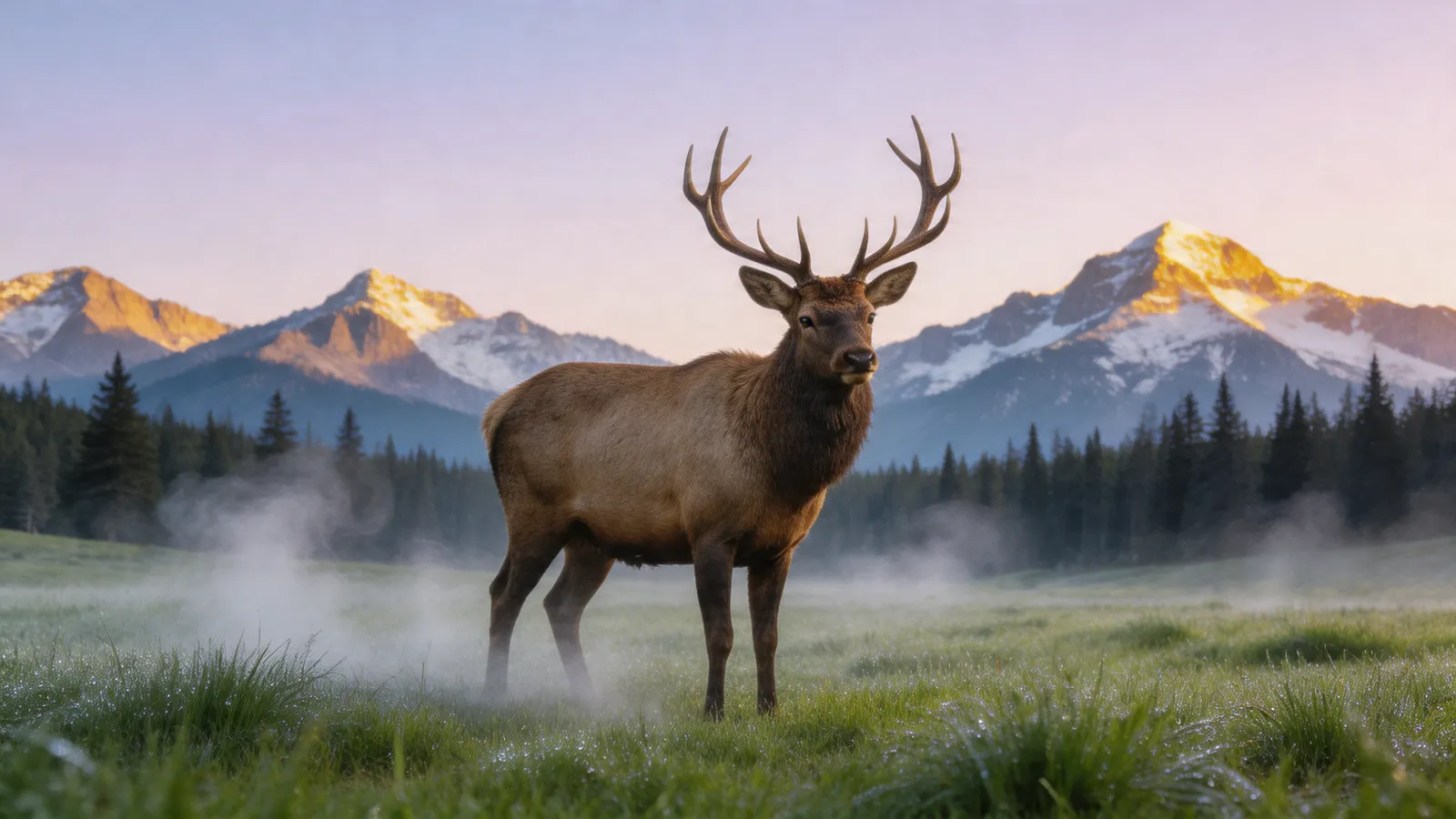
The first thing nobody tells you about booking a guided elk hunt is that the hardest part isn't the hunt. It's the year of waiting between the deposit check and the day you step off the truck at trailhead with your rifle case in one hand and a duffel that's already too heavy in the other.
You will spend that year reading forums, watching YouTube videos, second-guessing your boots, and wondering whether the outfitter you picked is actually as good as their website says. Some of that anxiety is unavoidable. Most of it can be eliminated with a few hours of clear-headed research up front.
What follows is the walkthrough I wish someone had handed me before I booked my first hunt. Not a sales pitch. Not "ten reasons elk hunting will change your life." Just the unvarnished mechanics of how this actually works, what it costs, what goes wrong, and what's worth spending money on.
Why Book a Guided Hunt at All?
If you're a hunter who has never set foot in elk country, the case for going guided your first time is simple: elk are not deer. They cover ten miles a day in country that will physically wreck a flatlander. They communicate over distances that flat-out break the brain of someone used to whitetail woods. And public-land elk in pressured units are not standing in a field at 7 a.m. waiting to be shot.
A good guide compresses a decade of learning into a week. They know where the elk are this year, not where they were three years ago. They know which drainages get hammered by other hunters and which ones don't. They've already done the e-scouting, the boot leather, the trail-camera work, and the relationship-building with private landowners.
You're not paying for a guaranteed kill. You're paying for the highest possible odds in a sport where the average DIY success rate hovers around 10-15%.
A guide isn't a guarantee. They're an unfair advantage. There's a difference, and the people who think it's the first thing are the ones who come home angry.
What a Realistic Budget Looks Like
This is the conversation most first-timers avoid until it's too late. Here's the math, broken into the categories that actually appear on your credit card statement:
Hunt Cost ($3,000 – $12,000+)
The headline number. A 5-day fully-guided rifle elk hunt with a reputable outfitter on private ground in Colorado, Wyoming, or New Mexico runs $5,500 to $9,500 in 2026. Public-land semi-guided hunts run cheaper, in the $3,000 to $5,500 range. Trophy operations on managed ranches run $10,000 to $25,000+. Archery hunts are typically slightly cheaper than rifle.
What's included varies wildly. Some outfitters include lodging, meals, and field care of game. Others are "guide only" and you arrange the rest. Read the fine print before you wire the deposit.
Tag and Licenses ($500 – $1,200)
Non-resident elk tags are the second biggest line item, and they vary by state. Colorado non-resident OTC bull elk tag is around $720. Wyoming general elk tag is around $730. New Mexico is similar. Some draw-only states (Arizona, Nevada) require applying years in advance and are essentially impossible without preference points.
Travel ($500 – $2,500)
Flights, rental vehicle (often a 4WD truck), gas to the trailhead, and lodging on either end of the hunt. If you're flying with a rifle and checked bags, plan for $500-$800 just in airline fees.
Gear (Variable, but Plan $1,500-$3,000 if You're Starting From Zero)
You will not get away from this hunt without spending money on gear. Quality rain shell. Insulated layering pieces. Boots broken in for steep terrain. Binoculars and a good harness. A pack capable of hauling a quarter of elk off a mountain. If you already have a backpacking kit, you're 60% of the way there. If you're starting from a whitetail-treestand baseline, you're starting from zero.
Meat Processing and Shipping ($300 – $1,200)
Most outfitters will recommend a local processor. A field-dressed elk yields 150-250 pounds of meat. Processing runs $0.85 to $1.25 per pound. If you're flying home, shipping frozen meat back is a real expense ($400-$800 depending on weight and distance), unless you drove out, in which case a chest freezer in the truck bed solves it.
Total Realistic Spend
For a first-timer doing it right: $8,000 to $14,000 all-in for a quality guided rifle hunt on private ground. Cheaper if you're scrappy with travel and gear. More expensive if you go for a high-end outfit. Either way, more than the website price.
See what hunts are actually available
BookYourHunt is the largest searchable database of vetted guided hunts. Filter by species, state, dates, and budget without sitting through outfitter sales pitches.
Browse Available HuntsHow to Vet an Outfitter (Without Getting Burned)
The single biggest mistake first-timers make is treating outfitter selection as a marketing exercise. Pretty website, drone footage of bugling bulls, and Instagram-grade hero shots tell you nothing about whether you'll actually fill your tag.
Here's what to look at instead:
1. References (And Actually Calling Them)
Every legitimate outfitter will give you a list of past clients. Most prospective clients never call. Be the one who does. Ask three things: What was your success rate during your hunt? Did the outfitter and guides do what they said they would? Would you book again?
If you get vague answers or hesitation, trust it. The hunting community is small. If someone got burned, they'll tell you.
2. Multi-Year Success Rate
Ask for the outfitter's documented success rate over the last 3-5 years, broken out by hunt type. Reputable operations track this and will share it. Aim for 60%+ on private-land rifle hunts and 40%+ on public-land hunts. Below those numbers, ask hard questions about why.
3. Tag-Drawing Help
If the hunt requires a draw tag (most quality units do), the outfitter should help you navigate the application. If they're vague about which units they hunt or what the draw odds look like, that's a red flag.
4. What Happens If You Don't Fill
What's the policy on a no-kill hunt? Reduced rate on a return trip? Nothing? This is normal (guides can't guarantee elk), but it should be clearly stated before you book.

What the Hunt Actually Looks Like Day-By-Day
A standard 5-day guided rifle elk hunt on private ground in Colorado looks roughly like this:
Day 0 (Travel + Arrival)
You fly into Denver, Albuquerque, Bozeman, or Cheyenne. You drive 2-5 hours to lodge or camp. You meet the outfitter, range your rifle at their range to confirm zero after the flight, and meet your guide. Cold beverage. Early to bed.
Days 1-4 (Hunting)
Wake at 4-4:30 a.m. Coffee, light breakfast, packed lunch. In the truck or on horseback to the trailhead by first light. Glass and stalk through morning. Mid-day siesta and meal. Evening hunt back at glassing position by 4 p.m. Return to camp after dark. Dinner, planning for the next day, sleep by 10 p.m.
If you fill a tag, the day shifts to field dressing, packing meat out, and getting it on ice or to the processor. Plan on a half-day minimum.
Day 5 (Final Day or Departure)
Either a final morning hunt or pack-out day. Settle the bill, tip the guide ($300-$700 cash is standard), pick up your processed meat or arrange shipping, drive back to the airport.
Common First-Timer Mistakes
What Goes Wrong
- Showing up out of shape for steep western terrain
- Bringing brand-new boots that aren't broken in
- Buying a new rifle two weeks before the hunt
- Packing too much non-essential gear
- Drinking too much the first night and being wrecked at 4 a.m.
- Ignoring guide advice on what to glass or where to sit
What Pays Off
- Three months of stair-mill or hill-walking with a weighted pack
- Boots with 100+ miles of break-in
- Hunting with a familiar rifle you've shot for two years
- A short list of layering pieces that actually work in cold rain
- Quality binoculars and a tripod adapter for serious glassing
- Showing up coachable and trusting the guide's local knowledge
Booking Timeline
Quality outfitters book 12 to 18 months out. Some of the best are on 2-year waitlists. If you're planning a 2027 hunt, you should be making contact with outfitters now in spring 2026. If you're planning a 2026 hunt, you're likely too late for first-tier operations and should focus on second-tier outfitters or last-minute cancellations.
BookYourHunt and similar platforms list cancellations and short-notice openings. Checking once a week takes about ten minutes and occasionally turns up a quality hunt at 30-50% off normal pricing.
Final Honest Take
A first guided elk hunt is one of the few life experiences that consistently lives up to the hype, provided you go in with realistic expectations and prepare like you actually mean it. You will be cold, wet, sore, and at some point genuinely frustrated. You will probably have a moment somewhere on day 3 where you wonder why you spent this much money to get up at 4 a.m. and walk uphill.
Then a 320-pound bull will step out of the timber at 240 yards and you will understand exactly why people do this for the rest of their lives.
Pick the right outfitter. Train for the terrain. Show up coachable. The rest takes care of itself.
Ready to start the search?
BookYourHunt lists vetted outfitters across every western state, with verified reviews and direct booking. The easiest way to compare options without spending a week on the phone.
Find Your First Guided Hunt